Cyber risk as a transaction issue
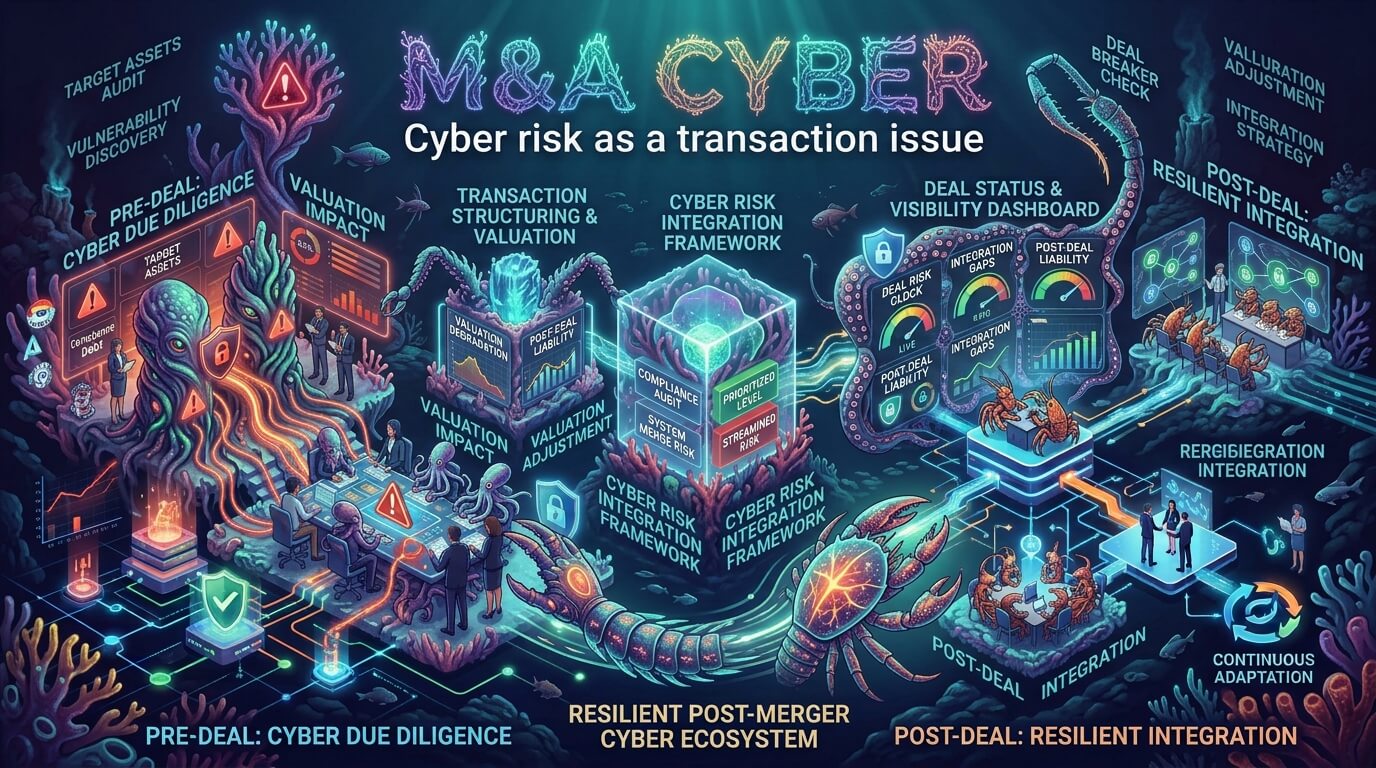
Cyber risk can directly affect the value, integration and operational continuity of a transaction. Yet cybersecurity considerations are sometimes addressed too late in the deal lifecycle, after key investment decisions have already been made.
For buyers, boards and integration teams, cyber risk should be considered alongside financial, operational, legal and technology due diligence.
The objective is not simply to identify vulnerabilities. It is to understand how cyber risk could affect transaction value, integration complexity, regulatory exposure and future operating costs.
Key areas of consideration
- Security maturity and existing cyber risk exposure.
- Critical applications, infrastructure and data.
- Identity and access management.
- Material cyber incidents and unresolved issues.
- Third-party and supply-chain dependencies.
- Regulatory and contractual obligations.
- Technology architecture and integration complexity.
- Required investment following completion.
- Security considerations during Day 1 and post-close integration.
The integration phase is particularly important. Combining environments, identities, data and technology platforms can introduce new dependencies and create additional exposure if security requirements are not incorporated into the integration plan.
A structured cyber perspective helps transaction teams understand the issues before they become unexpected costs or sources of value leakage.
Executive perspective: Cybersecurity is part of understanding the true technology and operational profile of a transaction—not simply a post-deal IT consideration.